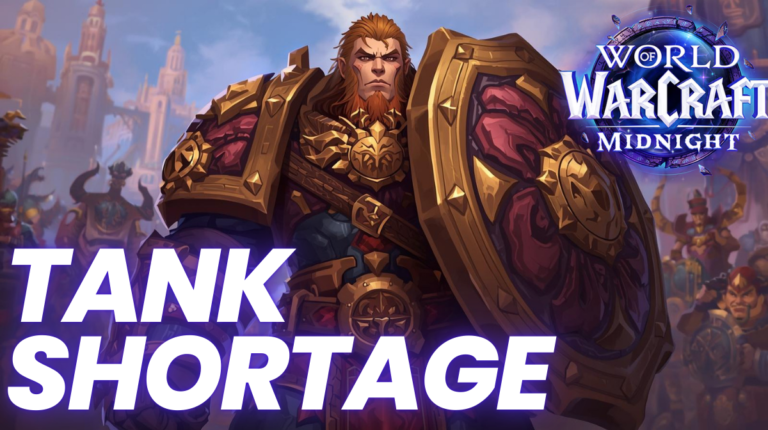
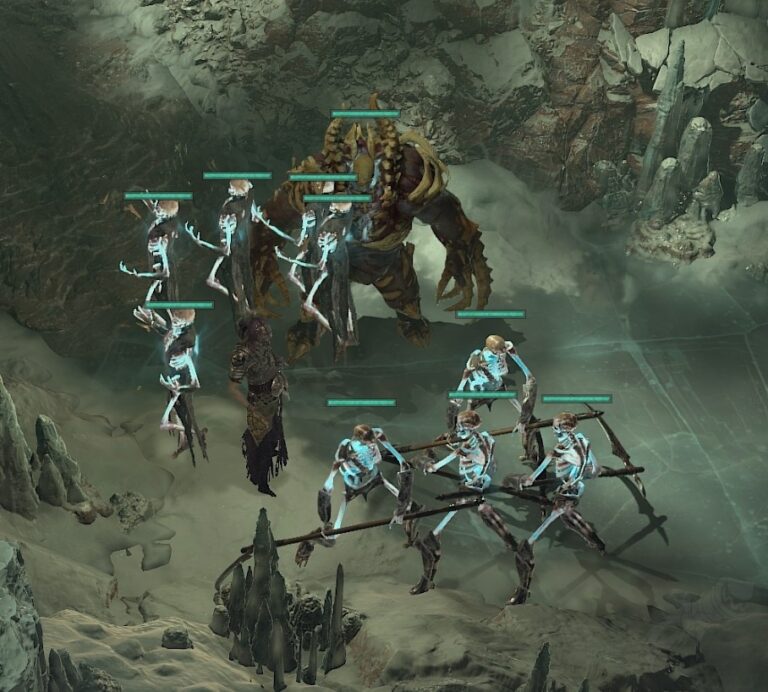
With the upcoming expansion, World of Warcraft: Midnight, many players are experimenting with new roles in preparation for a fresh start. Tanking, in theory, should be an exciting challenge: leading the group, controlling pulls, managing defensive cooldowns, and setting the pace of a dungeon run.
In practice, it’s become one of the least forgiving roles in the game.
And that’s a big reason there’s a tank shortage.
Tanking Isn’t Just About Surviving
In modern Mythic+ dungeons, tanking goes far beyond holding threat.
Tanks are expected to:
- Memorize optimized routes for every dungeon
- Manage mob percentage requirements
- Know which packs can be skipped and how
- Time defensive cooldowns precisely
- Adjust pacing around healer mana
- Anticipate DPS burst windows
- React instantly to mistakes made by others
At even moderate key levels, a tank isn’t just a frontline character — they’re the de facto group leader. Every pull is visible. Every mistake is obvious. And every deviation from the “expected” route is scrutinized.
That level of responsibility can be engaging.
It can also be exhausting.
The Social Pressure Problem
The mechanics are only half the issue.
What discourages many aspiring tanks isn’t difficulty — it’s player behavior.
Common frustrations include:
- Being told they’re pulling too slowly or too quickly
- Being criticized for not following an unspoken “optimal” route
- DPS players pulling extra packs without warning
- Harassment instead of constructive feedback
- Passive-aggressive whispers after a run
Even when a dungeon is completed successfully, tanks often absorb disproportionate blame for anything that felt inefficient.
And unlike DPS, tanks can’t fade into the background. Their decisions define the run. That visibility makes them the easiest target when tension rises.
Why the Shortage Persists
It’s common to hear complaints about long queue times and the lack of tanks and healers. But when tanking involves:
- High mechanical responsibility
- Mandatory route memorization
- Constant public scrutiny
- Minimal tolerance for learning
…it’s not surprising that many players choose to avoid the role entirely.
DPS roles, by comparison, carry less leadership pressure. Mistakes are more easily masked in a group of three. The emotional cost is lower.
When the experience of learning tanking consistently includes insults or hostility, many players simply decide their limited playtime is better spent elsewhere.
That choice is rational.
Design vs. Community
There’s ongoing debate about what drives this problem.
Some argue Mythic+ routing complexity creates friction. Others point to a lack of meaningful social moderation. Comparisons are often made to games like Final Fantasy XIV, where dungeon structure is more linear and expectations are clearer, resulting in fewer route disputes.
But no amount of system design can fully compensate for community culture.
If players feel punished for learning, fewer people will attempt high-responsibility roles.
The Cost of Hostility
When new tanks give up, the impact is larger than one person switching roles:
- Queue times increase
- Group formation becomes slower
- Players retreat into guild-only play
- Solo-focused content becomes more attractive
Over time, group content becomes dominated by veterans with thick skin or pre-made teams, while newer players avoid leadership roles altogether.
That’s how ecosystems shrink.
What Actually Encourages Tanks?
Interestingly, the most positive tanking experiences tend to share common traits:
- Clear expectations set before the key starts
- Constructive, specific feedback
- DPS players waiting for pulls
- Healers communicating pacing needs
- Groups advertising “learning” or “chill” runs
In environments where communication is collaborative rather than accusatory, tanking becomes what it was always meant to be: engaging and strategic.
The role itself isn’t the problem.
The environment around it is.
If Tanking Feels Intimidating — That’s Normal
For anyone considering tanking in the next expansion cycle, the difficulty isn’t a sign of incompetence. The role simply demands more visible leadership than others.
The real question isn’t whether tanking is mechanically possible.
It’s whether the social environment makes it worth the effort.
Until that changes, the tank shortage won’t be solved by balance tweaks or incentives alone.
It will be solved when learning is treated as part of the game — not as a liability.
About the Author